


In short
- Independent garage with two workshops in the UK, promoted through Google Ads Search, then Performance Max.
- One campaign for each line of business (MOT, bodywork, diagnostics, electric vehicles, Romanian customers), each with its own radius.
- Search filtering mattered: 1,844 negative keywords; clicks fell 28% while conversions rose.
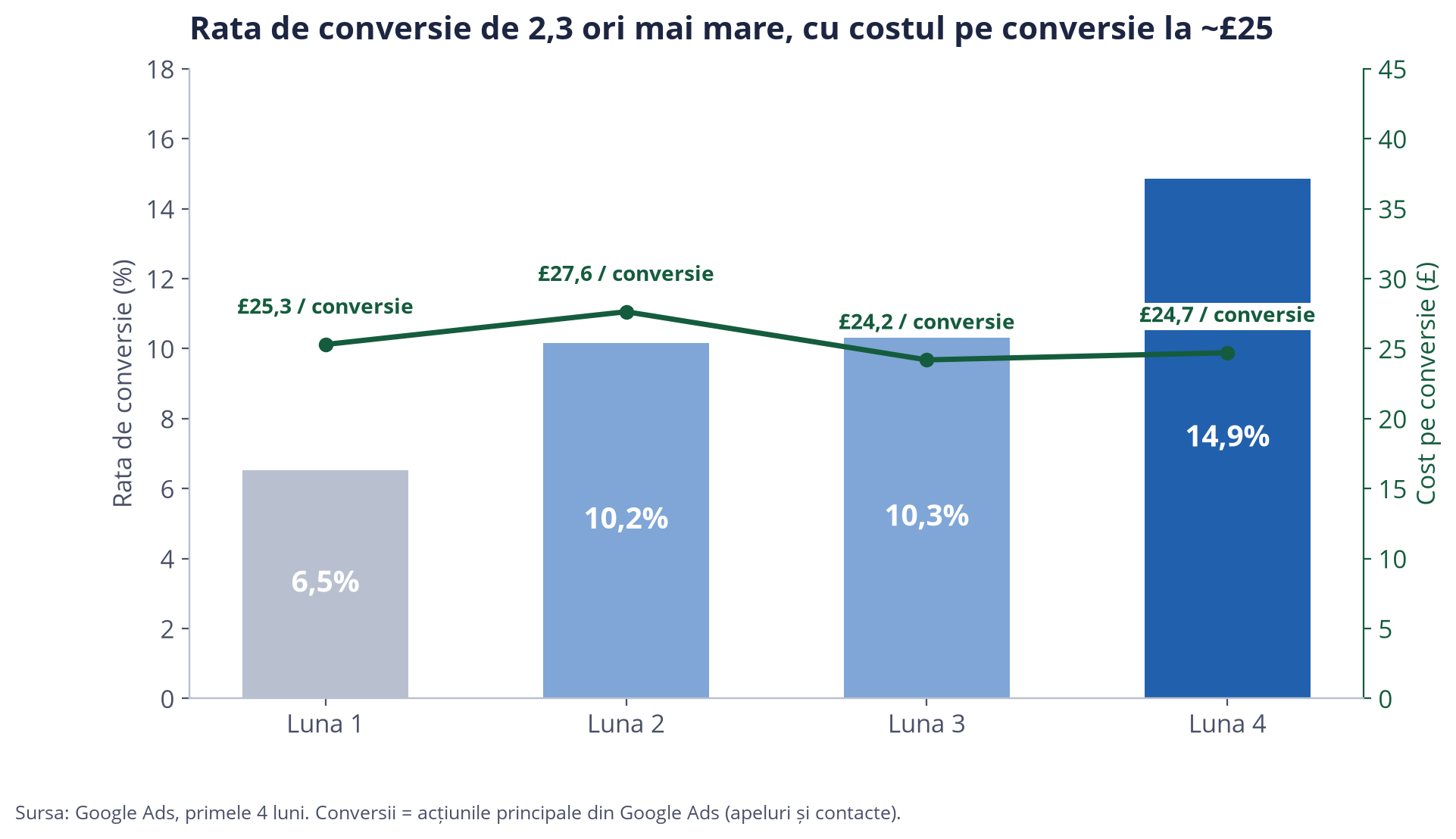
- In four months, the conversion rate rose 2.3x, from 6.5% to 14.9%, with a stable cost per conversion of around £25.
The context: a garage isn't a list of services
At first glance, an independent garage looks like a simple Google Ads client: people search for "car service" or "mechanic" and call. In reality, every workshop is a small ecosystem with its own rules:
- services very different in intent and value – the annual MOT, servicing, bodywork, diagnostics, electric vehicles;
- licences granted per workshop, not per company – one workshop can do a certain test, another can't;
- "near me" searches ("garage near me") that can generate lots of enquiries but can be picked up by several campaigns at once;
- local customers searching in English and a Romanian community searching in its own language, with a different website, phone number and expectations.
For a garage with two UK workshops, we built the campaigns around this reality, in four phases. Throughout, we stayed in touch with the client: their feedback consistently confirmed the leads coming in were qualified. This check on commercial relevance complemented the Google Ads metrics.
Phase 1: one campaign for each real line of business
The first step was structure. Instead of one general "car service" campaign, we launched one campaign per line of the business, each with its own ads, keywords and radius:
- MOT testing and diagnostics, from month one;
- bodywork, general servicing, electric vehicles and Romanian customers (in Romanian), from month two;
- Romanian customers in English, from month three;
- campaigns for the second workshop, from month four.
Each campaign had its own radius around the workshop offering the service. Someone looking for a bodywork repair doesn't see the same ad as someone looking for an MOT, and each lands on the right page.
Phase 2: exclusions and filtering – "MOT" isn't "motor"
The second phase was ongoing search filtering. The first big round meant 1,844 negative keywords across 6 campaigns, followed by further rounds, all exact match, only on what was clearly irrelevant. Knowing the niche mattered here:
- "MOT" isn't "motor". Google treats "mot" as a variant of "motor", so "motor oil", "motor service" or "motor filters" were triggering MOT ads. We excluded them.
- MOT is a per-workshop licence. MOT ads were tied only to the workshop holding the approval, not the whole company.
- Not every "MOT" search is demand. "mot check" and "mot history" are informational searches people use to check a car's history – hundreds of thousands a month in the UK, but with no booking intent.
- Competitors and large chains were excluded, so budget wasn't spent on people searching for another garage by name.
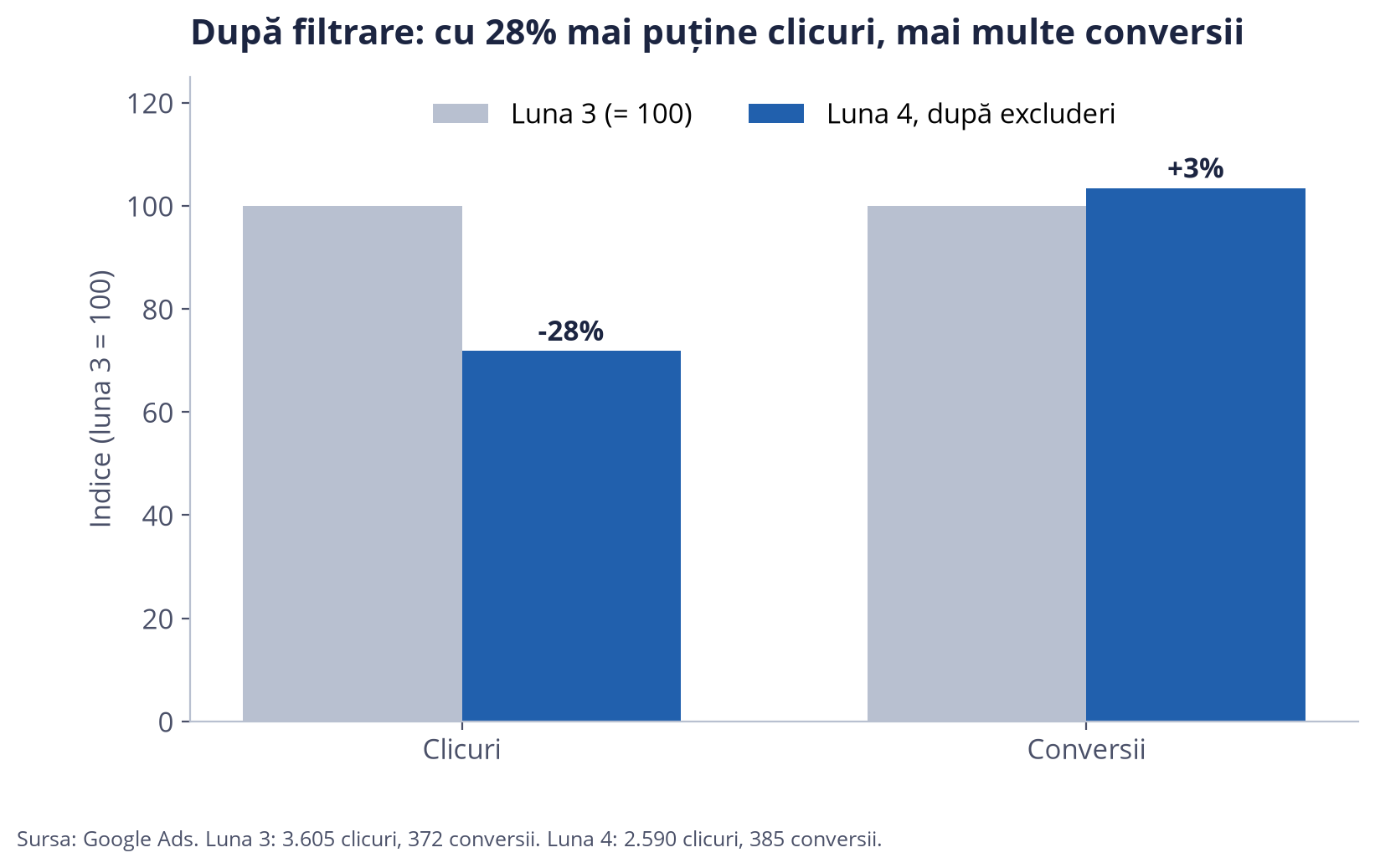
The effect showed from one month to the next: clicks fell 28% (from 3,605 to 2,590), while conversions rose (from 372 to 385). Less traffic irrelevant to the services promoted and more recorded enquiries, at a time when the client was confirming lead quality. We don't, however, confuse these enquiries with the number of cars that actually came into the workshop.
Phase 3: core keywords and localised ads
The third phase refined what was left:
- each theme's core search became a phrase-match keyword – 229 new keywords, 38 of them taken straight from search terms that had already brought enquiries;
- long-tail variants with no impressions (383) were paused to keep the structure clean;
- "near me" searches got a single "home" per workshop – the general servicing campaign;
- 19 ads rewritten and localised per workshop, with no pinned text, so Google could freely combine the most relevant headlines.
The "near me" rule came straight from the data. The same search cost very different amounts depending on which campaign picked it up:
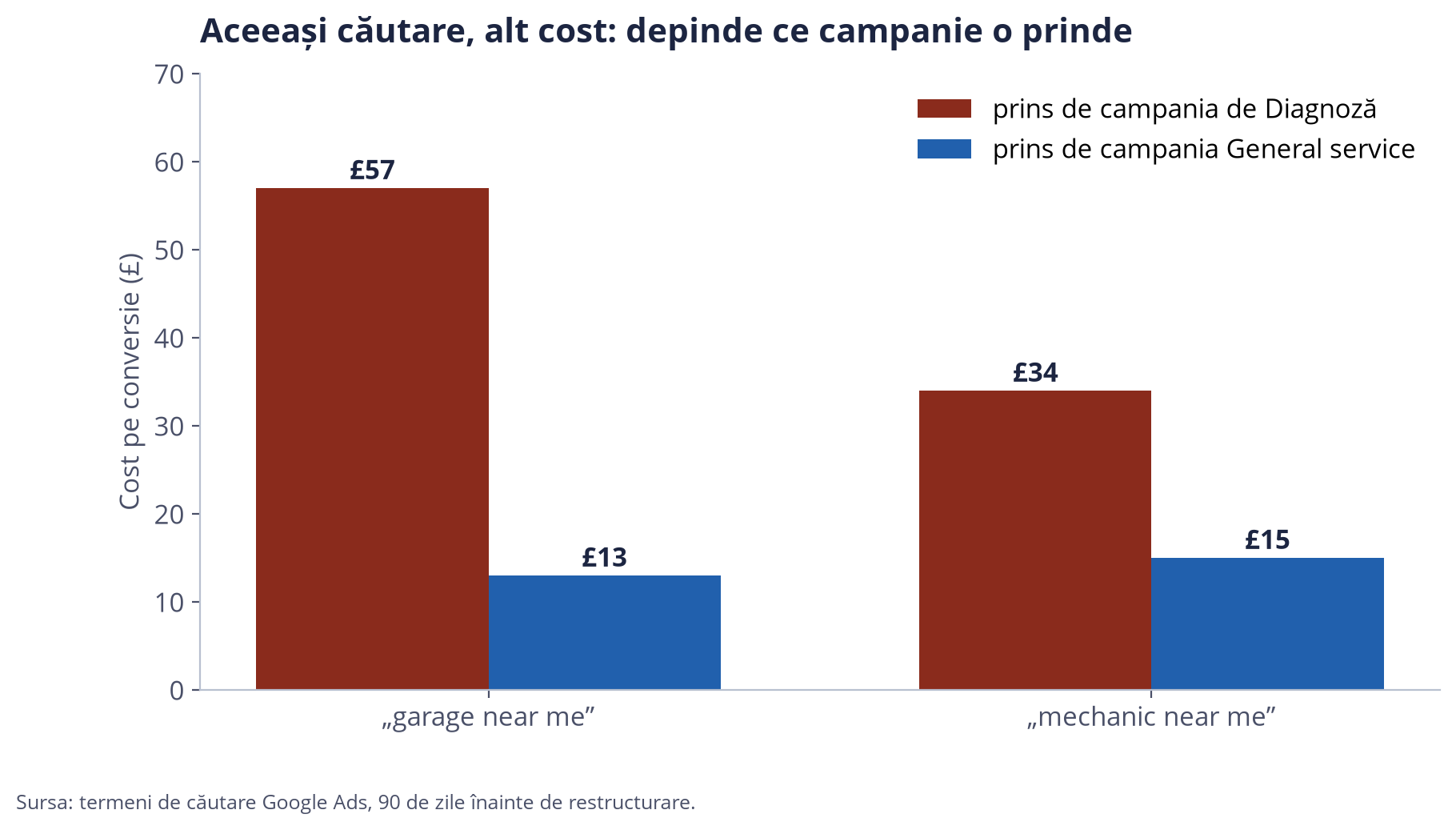
- "garage near me": £57 per conversion in the diagnostics campaign, £13 in the general servicing campaign;
- "mechanic near me": £34 versus £15.
Phase 4: Performance Max per workshop
The final phase added a Performance Max campaign for each workshop, fed by everything Search had learned: converting search themes, workshop images and a tight radius around each address. The logic: Search discovers and validates intent, and Performance Max extends it across Google's other networks to the same local audience.
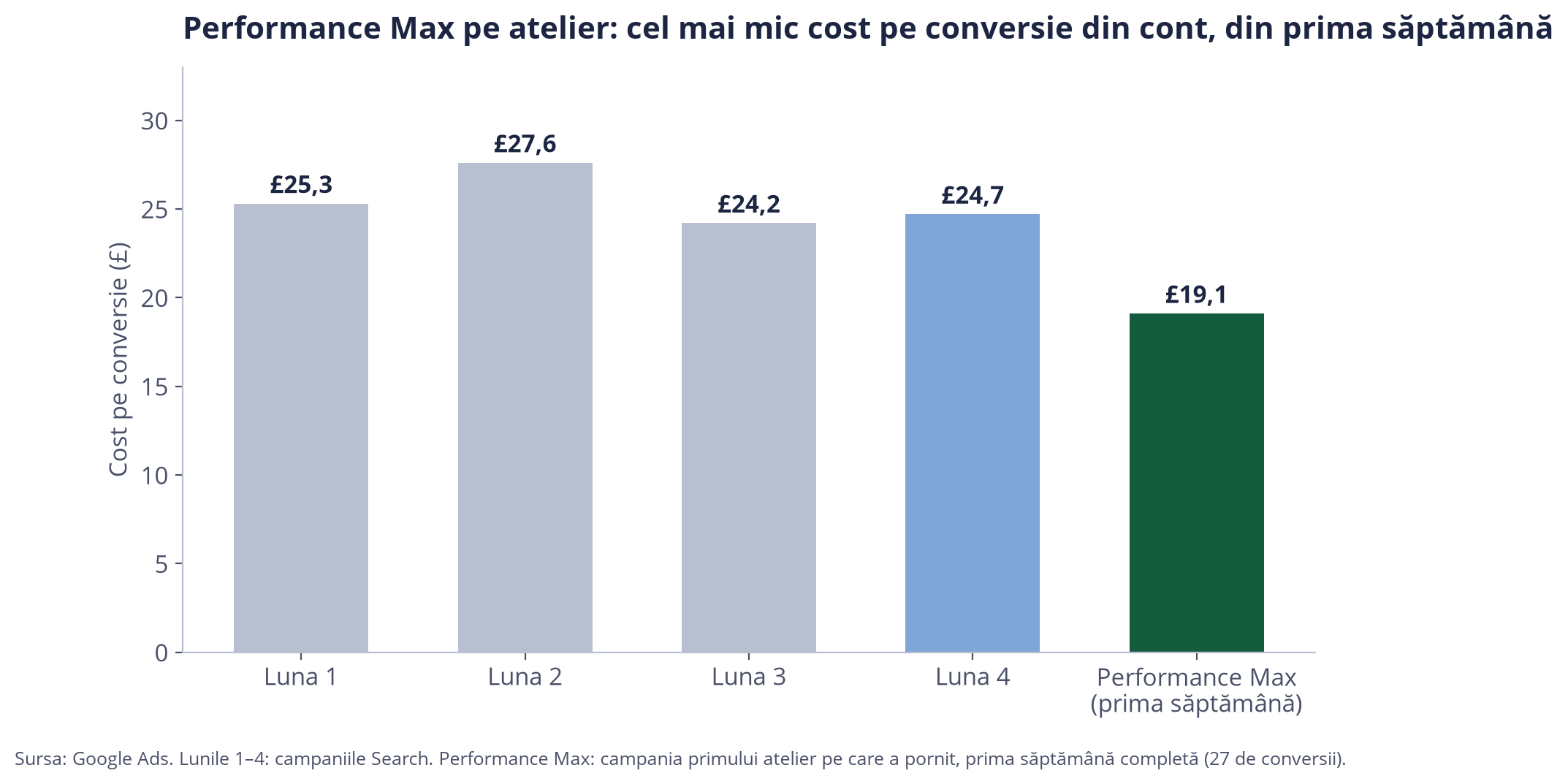
In its first full week, the first Performance Max campaign reported 27 conversions at £19.10 per conversion – about 23% below the ~£25 benchmark of the Search campaigns. For the reported search component, the cost was £13.30 per conversion. It's a promising first-week result, not a like-for-like comparison or a guarantee of what comes next.
The results: a 2.3x higher conversion rate
| Month | Conversion rate | Cost per conversion |
|---|---|---|
| Month 1 | 6,5% | £25,3 |
| Month 2 | 10,2% | £27,6 |
| Month 3 | 10,3% | £24,2 |
| Month 4 | 14,9% | £24,7 |
- Conversion rate: 2.3x higher, from 6.5% to 14.9%.
- Cost per conversion: stable, around £25, throughout.
- After filtering: 28% fewer clicks and more conversions, month on month.
- Performance Max per workshop: £19.10 per conversion from the first week – the lowest cost in the account.
The same approach – structure by workshop and by service, filtering on real intent – underpins our campaigns for garages and automotive businesses.
What we learned about the niche
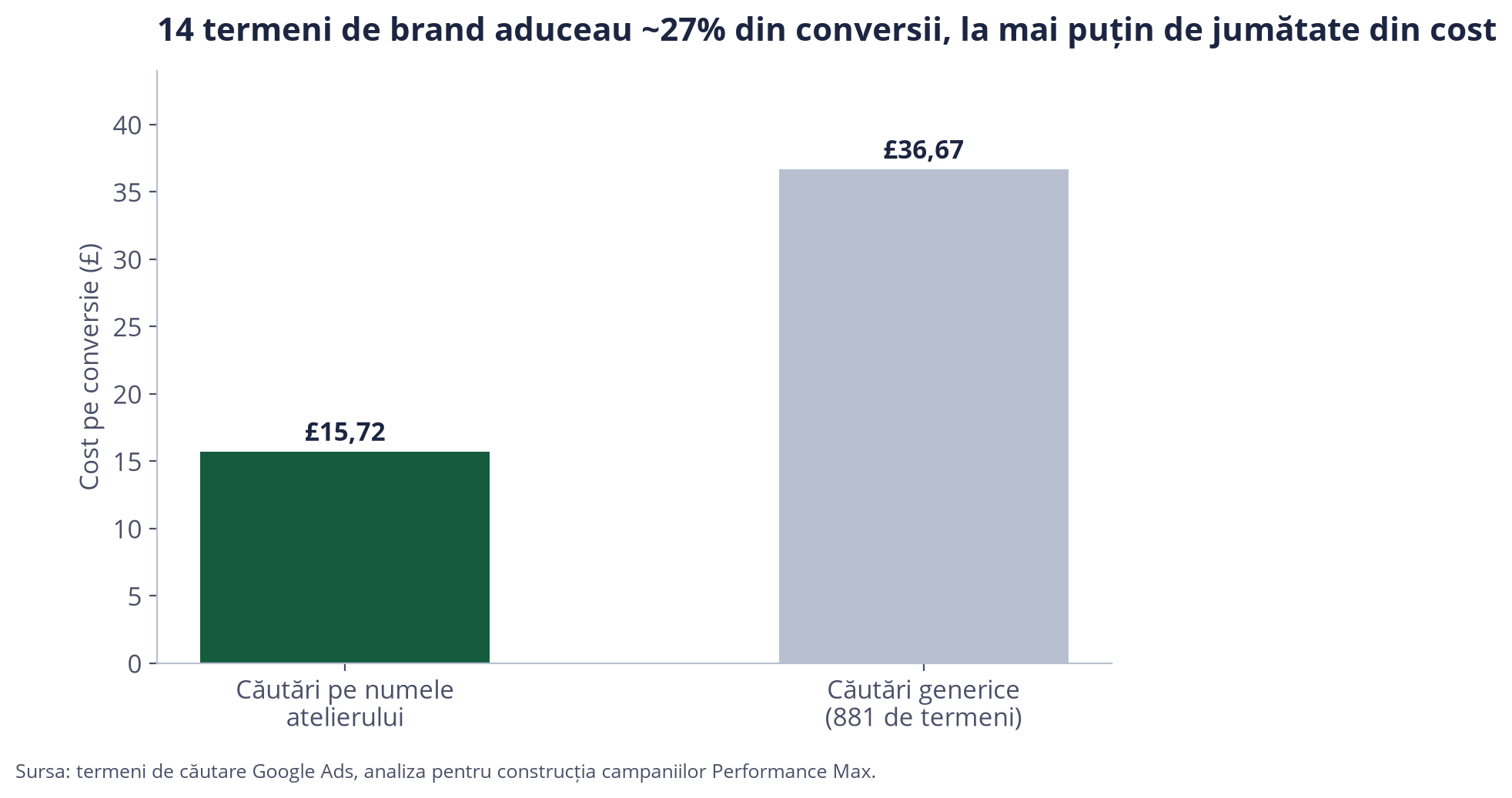
- The workshop's name converts at less than half the cost. 14 searches for the garage's name brought about 27% of conversions, at £15,72 per conversion, versus £36,67 on generic searches.
- "Near me" can work better in the right campaign. For "near me", cost per enquiry was much lower in the general servicing campaign than in the diagnostics one; the data measures enquiries, not actual bookings.
- Romanian customers are a separate market, not a translation. A different website, phone number and business profile, terms in Romanian and English, and a radius of a few miles around the community.
Conclusion
For a garage, campaign structure has to reflect the workshop, its approvals, services and service area, not just the list on the website. Over the four months analysed, this approach, together with search filtering and message adjustments, went hand in hand with the conversion rate rising from 6.5% to 14.9%, at a measured cost per enquiry of around £25.
It wasn't a single trick, but four phases each built on the last one's results, followed by a promising start for Performance Max. And platform reporting was complemented by constant communication with the client about lead quality. That way we optimise not just for more events in the account, but for enquiries that matter to the workshops' real business.







 © 2026 Digital Craft® Agency - All rights reserved.